

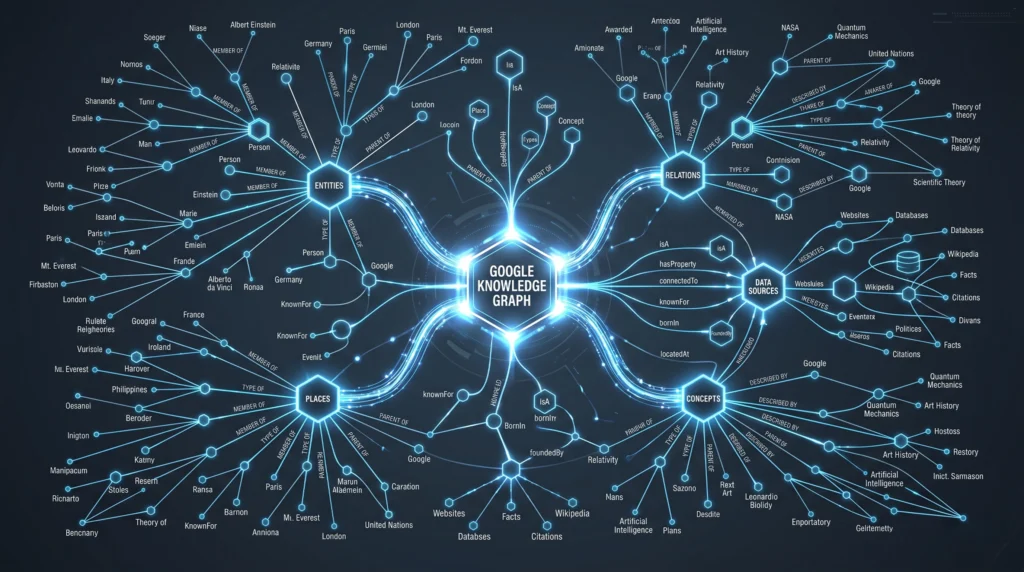
Search engines in 2026 do not read “strings” (individual words); they understand “things” (Entities). Powered by advanced Natural Language Processing (NLP) and the Knowledge Graph, Google understands the contextual relationship between people, places, concepts, and brands. If you want to dominate organic search, you must abandon keyword stuffing and transition entirely to Entity-Based SEO.
1. Moving from Strings to Things: What is an Entity?
An entity is a singular, well-defined concept. For example, “WooCommerce” is an entity. But Google’s AI knows that WooCommerce is deeply connected to other entities like “WordPress,” “E-commerce,” “Payment Gateways,” and “Open-Source Software.”
When you write content, the algorithm isn’t just scanning for your target keyword; it is scanning for co-occurring entities. If you claim to be an expert in WooCommerce development but your landing page doesn’t mention connected entities like “database optimization,” “payment API integration,” or “custom checkout architecture,” the algorithm determines your content lacks depth and refuses to rank it. You cannot fake expertise in an entity-based ecosystem.
2. The Architecture of Authority: Topic Clusters
Publishing 50 random blog posts on vaguely related topics no longer generates traffic. Entity-Based SEO requires a structured, architectural approach known as Topic Clustering. This is highly effective within a custom WordPress architecture.
A topic cluster starts with a massive, comprehensive “Pillar Page” covering a broad entity (e.g., “The Ultimate Guide to B2B Web Development”). You then create highly specific “Cluster Pages” that branch off from it (e.g., “Best Frameworks for B2B Sites,” “B2B UI/UX Trends”). By tightly linking these cluster pages back to the main pillar page using optimized anchor text, you create a semantic web of information. This structure signals to search engines that your brand is the definitive, authoritative entity on that entire subject.
3. Writing for Natural Language Processing (NLP)
Because Google uses AI to read and summarize content (via AI Overviews), your writing must be explicitly clear and devoid of fluff. The machine looks for definitive statements that connect entities together.
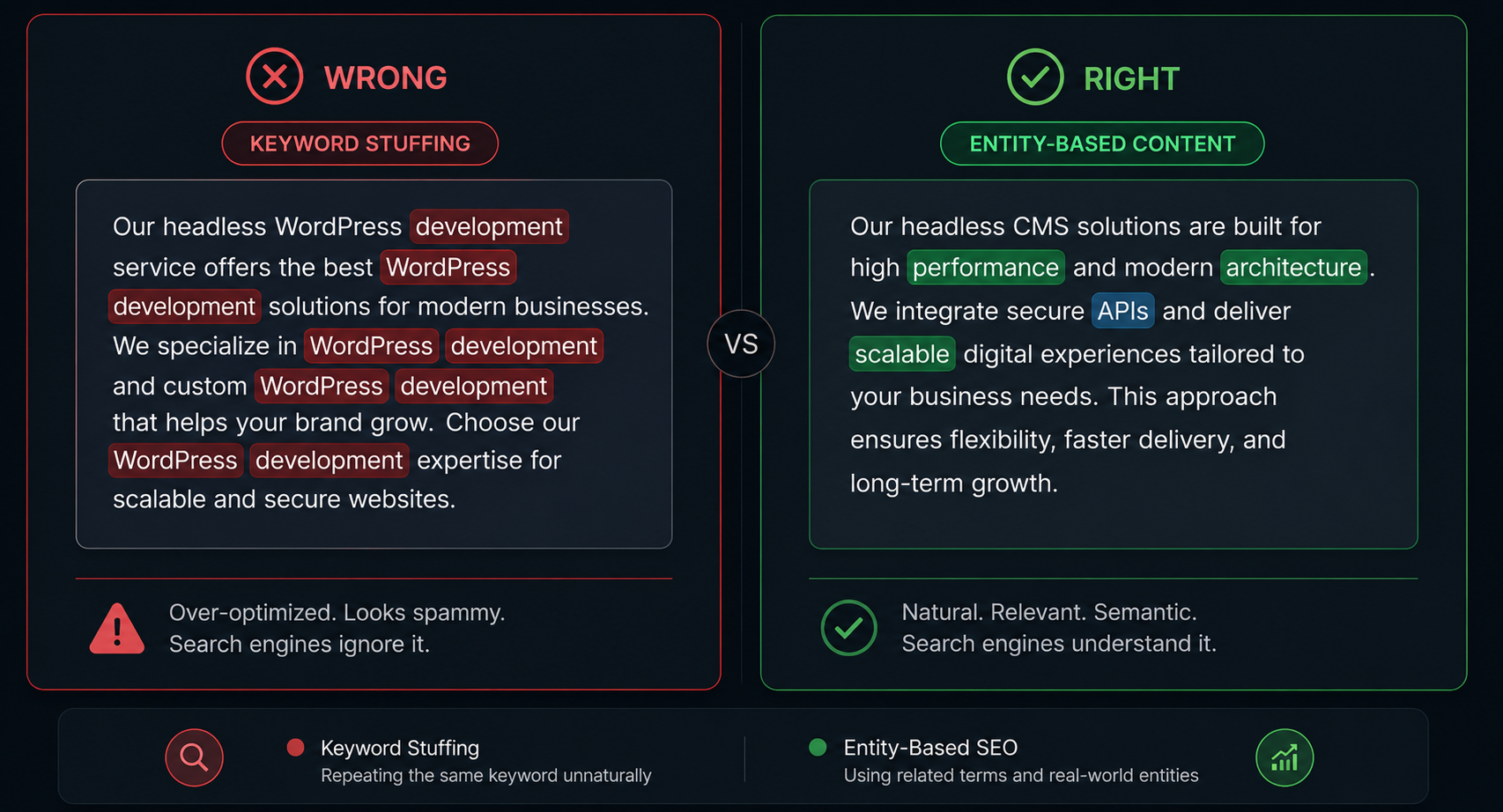
Instead of trying to hit a keyword density percentage, focus on NLP optimization. Answer the “Who, What, Where, When, and Why” immediately. Use clear structural HTML tags (H2s, H3s, bulleted lists, and tables) to frame your data. When you naturally cover a topic with true expert depth, the NLP-friendly entities will naturally populate your text, signaling high quality to the algorithm.
4. Establishing Your Brand as a Recognized Entity
The ultimate goal of Entity-Based SEO is to make your agency or business a recognized entity in Google’s Knowledge Graph. When search engines trust your brand entity, everything you publish ranks faster and higher.
This requires strengthening your E-E-A-T (Experience, Expertise, Authoritativeness, and Trustworthiness). You achieve this through advanced Schema Markup (specifically “Organization” and “SameAs” schema) on your WordPress site, linking your digital presence directly to your verified social profiles, industry publications, and high-authority backlinks. You are no longer just optimizing a webpage; you are actively engineering digital trust.
Conclusion: Stop Chasing Algorithms, Build Authority
Keyword stuffing is a desperate tactic from a bygone era. In 2026, ranking at the top of search results requires a sophisticated, entity-based content architecture that proves your undeniable expertise to both human users and AI engines.
Is your SEO strategy stuck in the past? Let our technical SEO and development experts rebuild your WordPress architecture into a highly structured, entity-driven digital asset.
m