

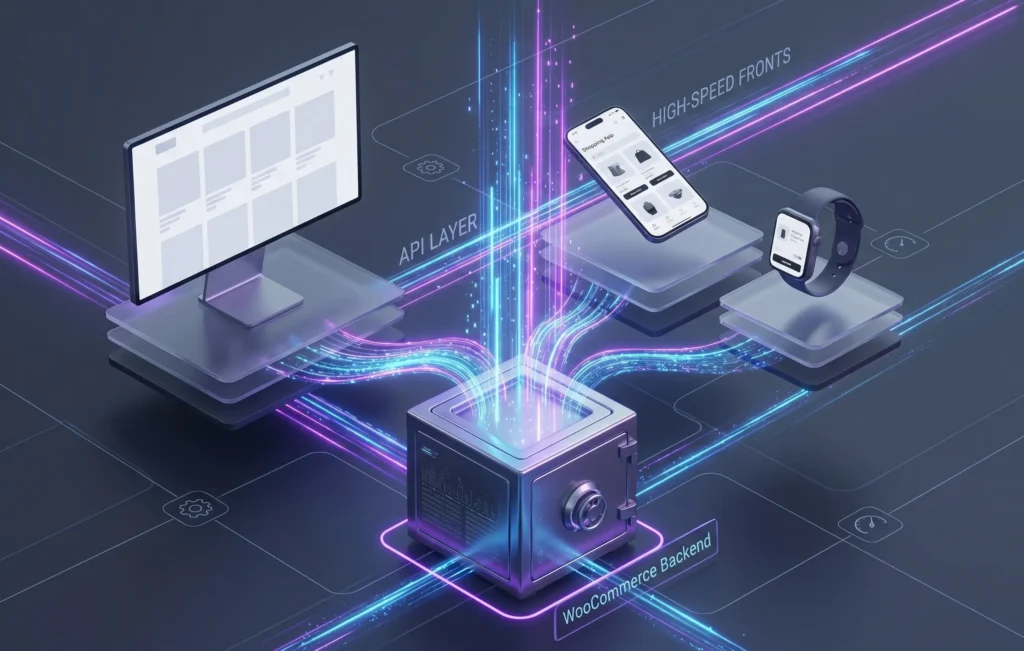
Standard WooCommerce is an incredible tool for launching an e-commerce business. But as a brand scales into high six or seven figures, the traditional “monolithic” setup—where the frontend design and backend database are tightly woven together—becomes a massive bottleneck. Every visual update, every traffic spike, and every third-party plugin taxes the same server, leading to slow load times and rigid user experiences.
To dominate the digital retail space in 2026, enterprise-level brands are abandoning the monolith. They are adopting Headless Commerce, a decoupled architecture that unlocks infinite scalability, lightning-fast speeds, and true omnichannel capabilities.
1. What is Headless Commerce?
In a standard setup, WooCommerce handles both the data (inventory, orders, pricing) and the presentation (what the user sees on their browser). Headless Commerce “cuts the head off” by completely separating these two layers.
You continue to use WooCommerce as your robust, secure backend control center for managing products and fulfilling orders. However, the frontend—the actual storefront your customers interact with—is custom-built using high-performance modern JavaScript frameworks like React, Next.js, or Astro. The two systems communicate instantly via APIs (like GraphQL).
2. Eradicating Server Delays for Instant Load Times
When a user browses a traditional WooCommerce store, every page load forces the server to process PHP scripts and query the database. During high-traffic events like Black Friday, this heavy processing load crashes servers.
A headless frontend changes the game. Frameworks like Astro pre-render your storefront into lightweight, static HTML files distributed across a global Content Delivery Network (CDN). When a customer clicks a product, the page loads in milliseconds because they are downloading a static file from a server physically close to them, completely bypassing the heavy WooCommerce database. This guarantees sub-second speeds, flawless Core Web Vitals, and zero downtime.
3. True Omnichannel: Sell Anywhere, Instantly
Modern consumers do not just shop on desktop websites; they buy through native mobile apps, smart devices, and customized digital kiosks. If your frontend is locked to WordPress, you are restricted to a web-only experience.
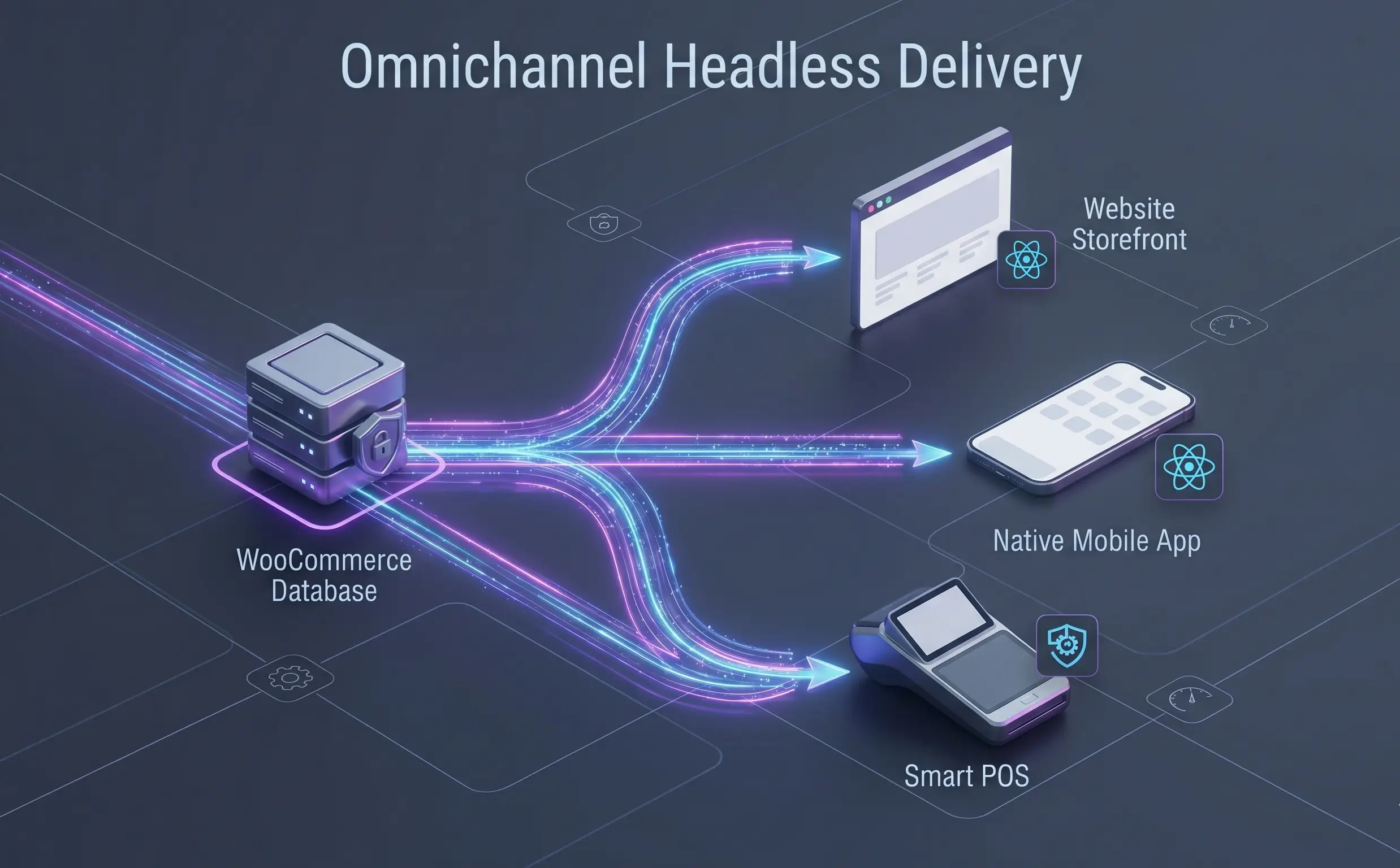
Headless architecture allows your single WooCommerce backend to power infinite frontends. Using APIs, you can push your product catalog and checkout logic to a React Native mobile app, a progressive web app (PWA), or even an augmented reality (AR) shopping interface. You manage your inventory in one place, but you sell everywhere seamlessly.
4. Military-Grade Security for Your Database
Traditional e-commerce sites expose their entire underlying CMS to the public web, making them constant targets for malicious bots and DDoS attacks.
Because a headless frontend is completely separated from the backend, your WooCommerce admin dashboard and sensitive customer database are never exposed to the public internet. You can lock your backend behind strict firewalls and VPNs on a hidden domain. Hackers cannot compromise a database they cannot interact with, providing your brand with an impenetrable security layer.
Conclusion: Future-Proof Your E-Commerce Brand
Headless Commerce is not just a technological upgrade; it is a strategic business advantage. It empowers brands to deliver frictionless, app-like shopping experiences that convert at the highest possible rates, all while keeping the backend secure and scalable.
Is your store restricted by outdated architecture? Partner with our technical experts to decouple your WooCommerce setup and build a high-speed, enterprise-grade digital storefront.